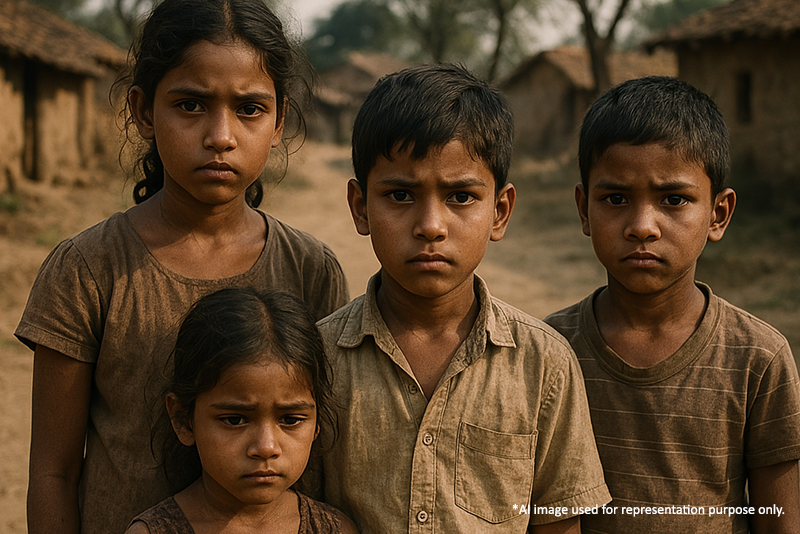
Child labour is not just a standalone issue. It is part of a deeply rooted cycle that continues across generations. Children forced into work miss out on education, limiting their future and increasing the risk of the cycle repeating. Breaking this cycle requires more than removing a child from labour; it requires sustained support, access to education, and stronger systems that enable families to choose schooling over survival.
In this blog, let’s explore the vicious cycle of child labour, and how CRY UK is helping children reclaim their right to education and dignity.
What is the cycle of child labour?
The cycle of child labour is a self-perpetuating loop where poverty, lack of education, and limited opportunities reinforce one another. It is driven by a set of interconnected factors:
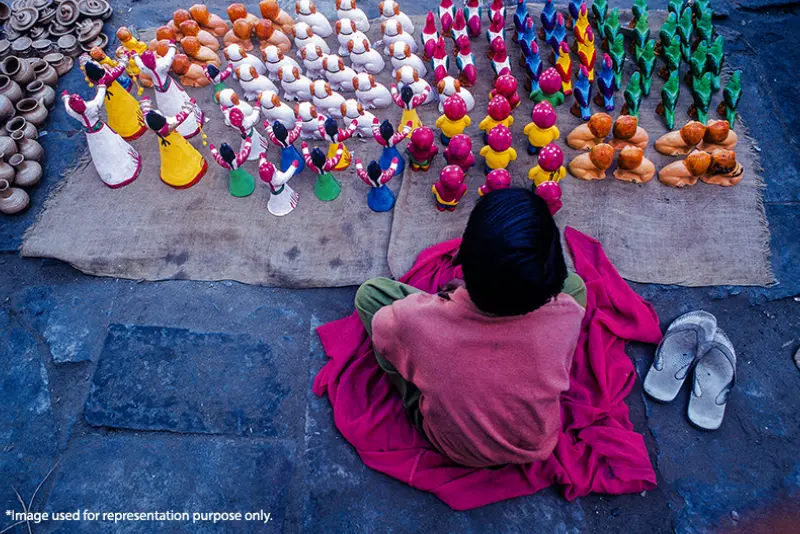
Poverty and economic pressure: Families facing financial hardship often rely on children’s earnings to meet basic needs, making child labour seem like a necessity rather than a choice.
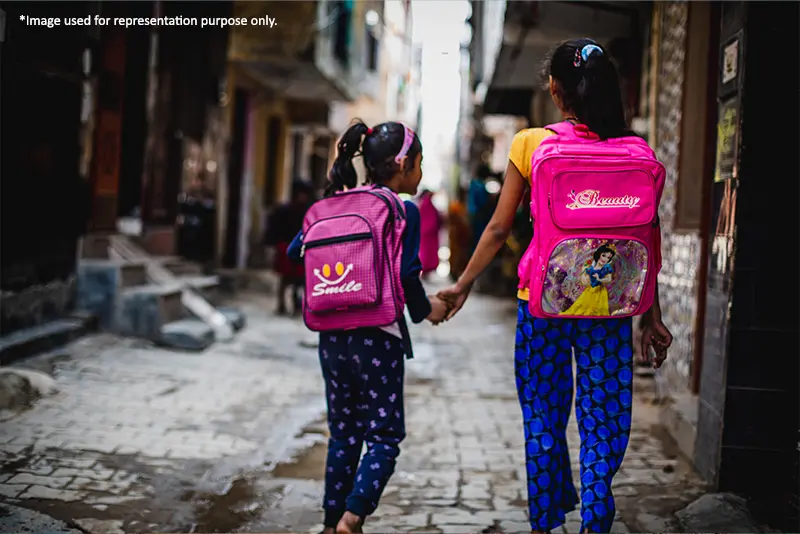
Limited or interrupted education: Children engaged in labour often drop out of school due to barriers such as lack of access to secondary education, poor infrastructure, and inadequate sanitation facilities, issues that disproportionately affect girls, especially during menstruation.
Additionally, frequent migration in search of livelihood disrupts children’s education, making consistent learning difficult.
Low-Skilled adulthood: Without access to education, these children grow into adults with limited employment opportunities, often trapped in low-paying and unstable work.
Intergenerational impact: These economic challenges persist across generations, increasing the likelihood that their children will also enter labour early, continuing the cycle.
How CRY UK is breaking the cycle
** CRY UK addresses child labour through a holistic, long-term approach that tackles both prevention and rehabilitation:
Strengthening families to reduce economic dependence on child labour CRY UK works closely with families to ease financial pressures that often push children into work. By connecting them to government programs for food security, employment, education sponsorship, financial aid, and supporting sustainable livelihood options, families are better equipped to prioritise their children’s education.
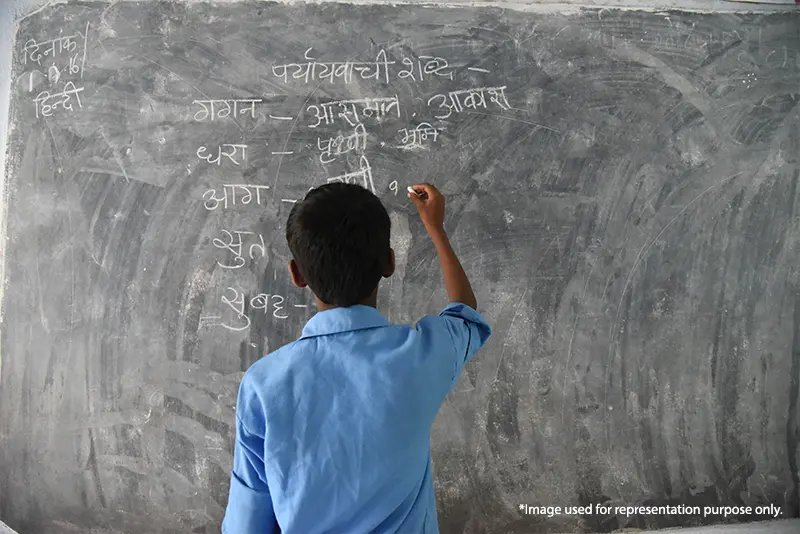
Ensuring access to quality education From improving school infrastructure and monitoring teacher–student ratios to addressing barriers like distance, hygiene and the lack of secondary education, CRY UK focuses on making education accessible and continuous. For children who have dropped out, activity-based learning centres help them re-enter the education system with confidence and support.
Preventing child labour before it begins Children at risk such as school dropouts and first-time learners are identified early and supported both academically and emotionally through agency-led groups like Children’s Collectives and Adolescent Collectives. They are also provided safe spaces such as Child Activity Centres, where they can learn without judgement or fear. These spaces help build life skills, boost confidence, and encourage consistent engagement with education.
Rescuing and rehabilitating children in labour For children already engaged in labour, CRY UK collaborates with local authorities and child protection systems to support rescue and rehabilitation. The focus is not just on removal from labour, but on reintegration into education and long-term family support to prevent relapse.
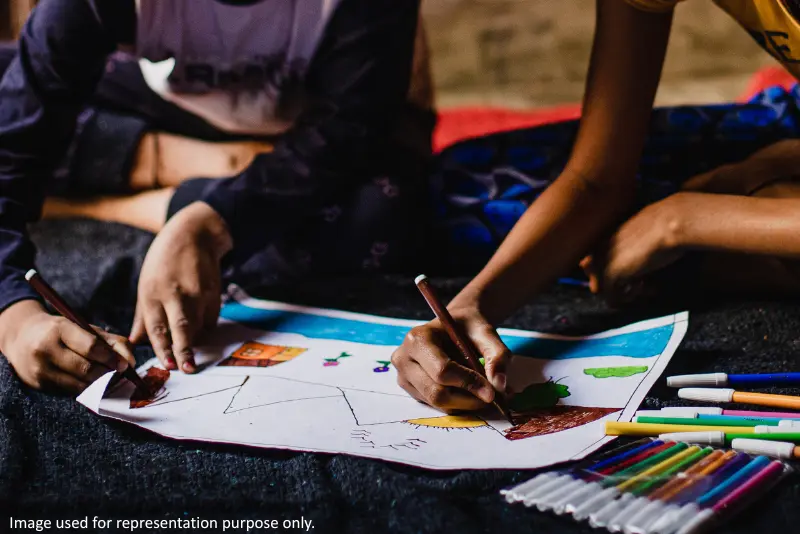
Supporting emotional well-being and confidence Recognising the emotional toll of child labour, CRY UK creates safe environments where children can heal and grow. Through sports, art, and group activities, children rebuild confidence, develop resilience, and rediscover a sense of belonging.
Empowering children to know and claim their rights Children are encouraged to actively participate in awareness campaigns and community initiatives. By understanding their rights and raising their voices, they become agents of change within their communities.
While CRY UK has impacted the lives of over 40,000 underserved children in India helping them stay in school and protecting them from child labour and child marriage millions of children are still at risk of losing their childhoods far too soon. While World Day Against Child Labour reminds us of this urgent reality, the need for action continues every day. Your support to CRY UK can help bring more children into schools, and give them the opportunity to build lives of opportunity and dignity.
How education breaks the child labour cycle
Education is the first step towards change across all communities. It gives an individual the power to think for themselves, make informed choice....