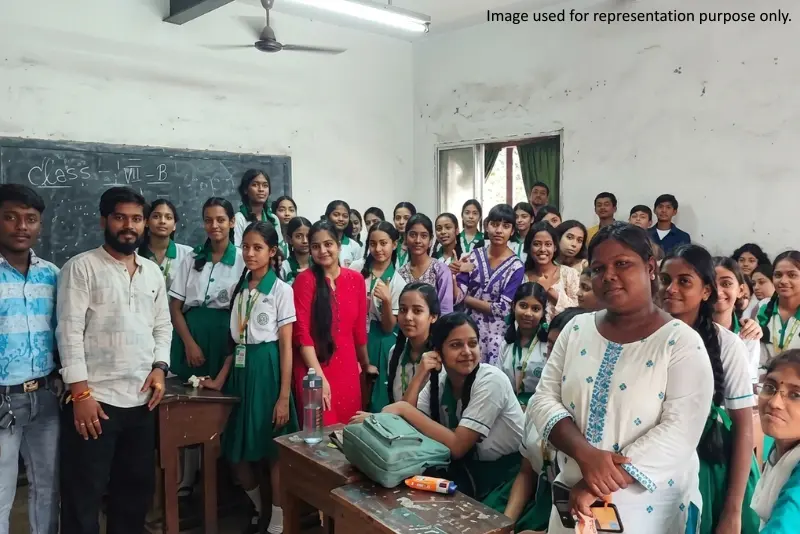
For many underserved girls in India, childhood ends too soon. Housework, caregiving, labour, and early marriage consume the years meant for learning and growing. When she loses this time, she also loses her chance at education, safety, and the freedom to choose her own future. According to a 2025 UNICEF report, nearly 4 in 10 adolescent girls and young women globally do not complete upper secondary school, and 1 in 5 girls marry in childhood. Around 122 million girls remain out of school globally.
In today’s blog, let's explore the possibilities that begin when girls stay in school, and what CRY UK is doing to ensure girls have a future filled with dignity and opportunities.
When girls have the chance to stay in school, the benefits can shape their health, choices, livelihoods and communities long after they leave the classroom. Let’s understand how:
Delays early marriage and teenage pregnancy risks: Staying in school gives girls more time to learn and grow before responsibilities of adulthood take over. Continuing education can help delay marriage and childbearing, giving girls more time to complete their education, develop skills and make decisions about their futures.
Improves health and wellbeing: Education gives girls the knowledge to make informed choices about puberty, menstrual hygiene, nutrition and reproductive health. This knowledge continues to benefit them as they grow older, contributing to healthier pregnancies, better healthcare decisions and improved health for their children.
Increases future earning potential: Completing secondary education can open up more opportunities for girls when they enter the world of work. More years of schooling can lead to better skills, qualifications and earning potential, helping women build greater financial independence and support their families.
Builds confidence and leadership: When girls stay in school, they get the safe space to express themselves, understand their rights and take part in decisions that affect them. Over time, this can help them become more confident participants in their families, workplaces and communities.
Challenges gender discrimination: Education helps girls challenge expectations that limit them. As more girls stay in school and grow into women with greater knowledge, opportunities and decision-making power, these changes ripple through families and communities, helping shift attitudes towards what girls and women can do.
Strengthens families and communities: The benefits of girls’ education can extend beyond one girl. According to the 2022 World Bank report, when women have greater control over household income, spending is more likely to support children’s education, health and nutrition, helping create better opportunities for the next generation.
How CRY is advocating for girls’ education
CRY believes that when one girl gets the opportunity to stay in school, the possibilities can reach far beyond her own future. Partnering with grassroots organisations, CRY works with families, schools, and communities to address the barriers that can push girls out of school.
Let’s take a closer look:
Helping girls enrol and attend school regularly- CRY works at the community and systemic levels to identify girls who have never enroled or have dropped out, understand what is keeping them away, and support their enrolment or re-enrolment. Teams also follow up on attendance to help girls stay connected to school.
Counselling families to delay early marriages- Through conversations with parents, mothers’ groups and home visits, CRY helps families understand children’s rights and the importance of keeping girls in school. For girls at risk of early marriage, these conversations focus on how continuing education can open up more choices for their future.
Offering academic support beyond textbooks- When household responsibilities or long gaps in education leave girls behind, returning to school can be difficult. Remedial support centres help girls rebuild foundational skills and catch up with age-appropriate learning, with individual progress monitored along the way. Digital skills sessions, from preparing spreadsheets and documents to navigating technology, also help girls feel more prepared for the world beyond school.
Making schools safer and easier to access- CRY works with communities to improve school facilities, including clean and separate sanitation spaces for girls, and to improve access to secondary and higher secondary education closer to home. Where distance continues to be a barrier, hostel facilities can give girls a safe place to stay while continuing their education.
Giving girls spaces to speak, learn and be themselves– Through Child Activity Centres, girls have a place to learn, talk about what is on their minds and share challenges they may not feel comfortable discussing elsewhere. These spaces help girls build confidence, support one another and feel heard.
Helping families manage financial pressures- CRY connects families with government programmes, social support and livelihood opportunities to ease financial pressures at home, so girls are less likely to be pulled out of school to work or take on household responsibilities.
As we approach International Day of the Girl Child this October, let's remember that a girl's education is her right and an essential step towards a more equal future. With your support, we can help more girls stay in school, complete their education and build stronger futures for themselves and their communities. Donate to CRY UK to help strengthen girls' education and keep their choices and possibilities open.
From dropping out to dreaming again: Arjun’s return to education
For many underserved children, staying in school is more than wanting to learn. It is a way of connecting with a world beyond their immediate ci....